
FOUNDER
创办人简介
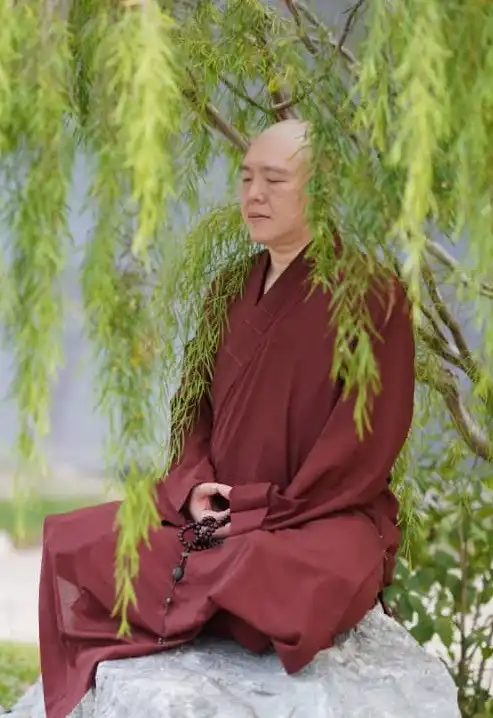
Venerable Kai Shan
Founder of ShanDao
Venerable Kai Shan, also known as Master Kai Shan, was tonsured as a monk in Johor Bahru in 1990. Over more than thirty years of Dharma propagation, his footprints have covered all states of Malaysia, establishing multiple temples and centres. He has dedicated himself to promoting Buddhist education, culture, and charity, guiding countless beings onto the path of Bodhi with compassion and wisdom.
1990
- Deeply aware of the impermanence of worldly affairs, the aspiration to renounce lay life arose.
- Tonsured as a monk at Yizhen Fajie in Skudai, Johor Bahru, under the guidance of Master Wen Dian.
1992
- Received the Three-Platform Precepts at Kek Lok Si Temple in Penang.
- Appointed as Vice Abbot of the Guan Yin Pavilion in Petaling Jaya. During this tenure, frequently visited Kajang Prison to propagate the Dharma, fulfilling the repentance wishes of death row inmates, giving them the opportunity to hear the Dharma, understand the principles of karmic cause and effect, suffering, emptiness, and impermanence, and awakening those still in the abyss of sin to realise their true nature and attain Buddhahood, enabling them to pass peacefully after receiving the Dharma.
- Received Dharma transmission from Master Wen Dian, given the Dharma name Zong Ren, inheriting the Caodong lineage and the Shouchang Dharma lineage, becoming the 53rd generation Dharma heir of the Shouchang lineage of the Caodong school.
1993
- Through hardship and with the support of devoted benefactors, established SHAN DAO JING SHE.
1994
- Through auspicious conditions and the support of benefactors, SHAN DAO JING SHE moved to its permanent address in Petaling Jaya.
- Established the Shandao Buddhist Society in Kota Tinggi, Johor.
- Became the abbot of the historic Guang Fu Ting in Kuala Lumpur.
1998
- Received the Linji Qita Dharma lineage personally transmitted by Master Jing Xin from Taiwan, given the Dharma name Hui An, becoming the 43rd generation Dharma heir of the Qita lineage of the Linji school.
1999
- Established the Shandao Welfare Centre.
2000
- Invited to serve as Buddhist counsellor at Assunta Hospital in Petaling Jaya.
2001
- Established the Bolin Shandao Pujue Zen Temple in Johor Bahru.
2006
- As devotees grew and the space became insufficient, began constructing the Great Compassion Hall of the Petaling Jaya SHAN DAO JING SHE.
- Organised the Shandao Gratitude Thousand-People Charity Dinner honouring parents.
- Established the Buddhist cultural centre — Rulai Pavilion.
- Expansion of the Penang Jiefu SHAN DAO JING SHE began.
2007
- The Great Compassion Hall of the Petaling Jaya SHAN DAO JING SHE was completed.
2008
- The Penang Jiefu SHAN DAO JING SHE was officially opened.
2009
- Fundraising for the second floor of the Great Compassion Hall and the fifteen-foot-tall Thousand-Handed Thousand-Eyed Avalokiteshvara Bodhisattva statue.
- Organised a performance of "Shakyamuni Buddha: The Musical" at the National Theatre, in collaboration with a music production company, to raise funds for the Shandao Welfare and Humanistic Development Fund.
- Began preparations for the Shandao Temple in Rawang, Selangor — a green environment integrating Buddhist culture and art.
2011
- The Shandao Buddhist Society relocated to Taman Kota Jaya, officially renamed SHAN DAO JING SHE.
2013
- Invited masters to consecrate the Buddha statues at the Kota Tinggi SHAN DAO JING SHE.
2014
- Invited eminent monks from within and abroad to consecrate the fifteen-foot Thousand-Handed Thousand-Eyed Avalokiteshvara Bodhisattva at the Great Compassion Hall of the Petaling Jaya SHAN DAO JING SHE.
2016
- Established the ShanDao.
2017
- Took over the Miaohua Vihara in Diliwang and renamed it SHAN DAO JING SHE.
2018
- The Diliwang SHAN DAO JING SHE purchased two adjacent plots of land.
2020
- Expanded the Diliwang SHAN DAO JING SHE.
2021
- During the pandemic, the ShanDao launched COVID-19 relief and charitable assistance activities, caring for underprivileged families and affected communities.
2022
- Officially took over the mountain temple in Tampin, naming it Lingshan Shandao Ancient Rock Zen Temple, and restarted the temple construction project.
2024
- Organised a Buddhist music charity concert to raise temple construction funds for the Diliwang SHAN DAO JING SHE.
- Established the Jinma Yang Shandao Temple Office.
2026
- Established the Malacca Shandao Hall.
Footsteps of Practice
Seeing Impermanence, Making the Great Vow
My renunciation of lay life was not from a momentary emotion,
nor from aversion to reality.
It was because I saw the impermanence of life far too early.
When I was young, three events deeply shook me and completely changed the direction of my life.
The first was a female classmate
For the first time, I felt so intensely: life is so fragile that there is not even time for a farewell.
The second was a male classmate
I stood there, looking at everything before me, feeling an immense emptiness descend.
The third was the most unforgettable
Later, I understood — he did head back first, just to a place I could not see.
These three deaths were like three heavy blows that shattered my understanding of the world. From then on, I often wondered: we busy ourselves every day chasing, striving, grasping — what are we really holding onto? People who were alive yesterday are dust today; everything we possess today may vanish tomorrow. At that time, I began to feel that everything in the world seemed so real, yet so illusory it was frightening. Like a dream. In the dream, sorrow and joy, partings and reunions — upon waking, nothing can be grasped.
Actually, before all this, I already had a faint thought of renouncing lay life. But it was very light, very distant, like a faint glimmer in the night sky. And impermanence illuminated that glimmer all at once. I knew that if I hesitated, perhaps my whole life would pass by. And so, I walked the path of renunciation.
After becoming a monk, I thought I would find a clear direction, but to my surprise, what came was another confusion. Different Dharma methods, each claiming supremacy. Those who chant the Buddha's name say the Pure Land is most reliable; Zen practitioners say directly pointing to the mind is fastest; Vajrayana has elaborate and solemn rituals and practice systems. Some even asserted that Mahayana is not the Buddha's word.
I was once very lost. Especially when I deeply encountered later Indian Vajrayana, I felt that its external forms, ritual expressions, and cultural presentations differed significantly from the simple and direct teachings of the Buddha's time and the rational analysis of the early Buddhist schools. This difference made me constantly ponder: is the development of the Dharma an unfolding of skillful means, or has it assimilated cultural elements of different eras through historical evolution?
I do not easily dismiss any tradition. But I deeply understand that practice cannot be built on vagueness and blind faith. If one cannot discern the development of Dharma lineages, how can one find peace and establish one's life?
And so, I decided to return to the source. I relearnt the fundamental teachings from the time of the Buddha; from the Four Noble Truths, the Noble Eightfold Path, and Dependent Origination, I sought to understand the core of the Buddha's original teachings. Then I traced the splitting of the Sangha a hundred years after the Buddha's parinirvana, understanding the formation of early Buddhist schools; and further studied the rise of Mahayana thought, especially Nagarjuna Bodhisattva's elucidation of emptiness.
Later, I turned my attention to the development of Chinese Buddhism. It was not until I encountered the teachings of Master Zhiyi (the founder of the TianTai Sect) that many of my inner divisions and confusions gradually found peace. In his system, I saw that the Dharma is not mutually conflicting but progressively revealed; not mutually negating but adapted to different capacities.
More importantly, I saw a complete and clearly ordered path of practice — starting from hearing and contemplating, through the practice of samatha and vipassana, ultimately returning to the harmonious awareness of the one mind. At that moment, I felt I had finally found a path that could bridge ancient and modern times, encompass all traditions, and at the same time be grounded in actual realisation.
Because of this, a deep aspiration gradually arose in my heart. I hope that, with the blessings of the Buddhas and Bodhisattvas, in my lifetime, I can establish a truly complete Sangha. Not just a Sangha that exists in form, but one with pure precepts, a system of hearing and contemplating, and a graduated path of practice.
There, monastics would know how to walk step by step; lay practitioners would also find methods for peace of mind. I hope that place is not just a temple, but a refuge where the weary can stop and rest. Where the anxious can learn to settle; where the lost can find direction; where the suffering can find comfort.
It can care for the suffering of the world and promote charity; it can also address the inner pressures of modern people, providing genuine methods for reducing stress and finding peace. Because I increasingly believe — what modern people lack is not just material help, but spiritual settlement. There are too many tall buildings in the world, but too few places to rest the soul.